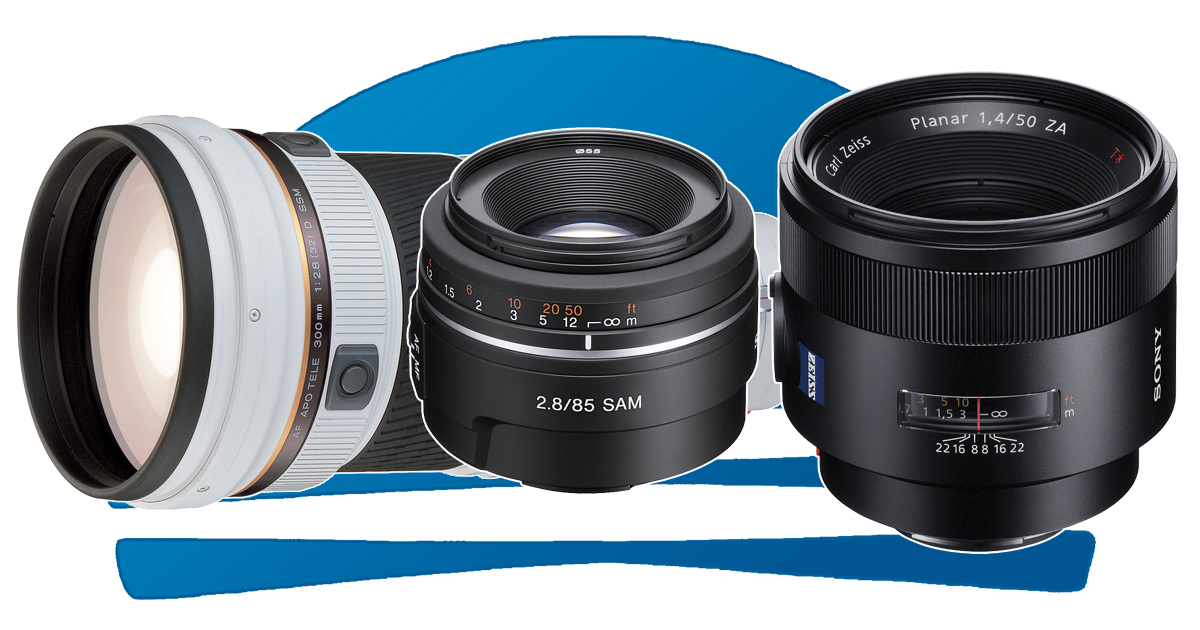
While Minolta introduced in-lens autofocus motors to the A-mount in 2003, it was Sony that fully utilises the technology. Introduced late for the film era, support for SSM/SAM lenses in film cameras is flaky.
In 2003, Minolta introduced two lenses — the Minolta AF 300mm F2.8 G APO D SSM and the Minolta AF 70–200mm F2.8 G APO D SSM. Both lenses introduced an in-lens focus motor, labelled as SSM – Super Sonic-wave Motor. It is an equivalent technology to the well-known Canon USM – Ultra Sonic Motor. Technically, it’s a piezoelectric ring motor that drives the focus group directly without gears, yielding faster, quieter AF and typically allowing full-time manual focus override.
Introduction of a new autofocusing technology in 2003 meant that film cameras significantly older than that aren’t able to use autofocus on those two lenses. But both lenses were top-of-the-line models, and film photographers of the era wanting to use them were already using equally top-of-the-line cameras or considered switching to digital cameras that fully supported the technology outright.


Then and now
In the last 23 years, a lot has changed. Film went into obscurity, Minolta merged with Konica and got sold to Sony; Sony made a whole bunch of digital cameras with A-mount only to officially discontinue it almost two decades later in 2022. With a whole bunch of DSLRs across the price range, Sony also introduced a whole bunch of lenses with in-lens focusing motors and even introduced a less complex and less expensive in-lens focusing technology – SAM, Smooth Autofocus Motor. What was an exotic and expensive technology available only to professional photographers is now a widely available, affordable option. In a digital world, everything is just fine; even a “lowly” Konica Minolta Dynax 5D supports both SSM and SAM lenses out-of-the-box. But in a film world, with film cameras solidly frozen in time, support for exotic technology is flaky, at best.
For us wanting to use all those more or less fancy SSM or SAM lenses on film cameras, options fall down to just seven models – all the last hurrah models made after the turn of the millennium, single-digit Dynax models (and a Dynax 60), and a sole exception of a Minolta Dynax 9, released in 1998, that needs a factory update.
Compatible cameras
Only film cameras listed here are able to use SSM and SAM in-lens motors for focusing. All other, older cameras don’t support the feature, and manual focusing is the only available option.
Since Minolta used three different naming schemes – for the domestic market in Japan (and China), for North American markets and for the rest of the world – the list is divided into three sections.
| Camera | Introduced | Support type |
|---|---|---|
| Dynax 9 | 1998 | Optional upgrade |
| Dynax 9Ti | 1999 | Optional upgrade |
| Dynax 7 | 2000 | ✅ |
| Dynax 7 Limited | 2001 | ✅ |
| Dynax 5 | 2001 | ✅ |
| Dynax 4/Dynax 3 | 2002 | ✅ |
| Dynax 3L | 2003 | ✅ |
| Dynax 60 | 2004 | ✅ |
| Dynax 40/Dynax 30 | 2004 | ✅ |
Interestingly enough, while even entry-level models have the full support for SSM and SAM lenses, the top-of-the-line model, Dynax/Maxxum/α 9, needs a factory update. That indicates a change of plans in lens technology development that was not forseen or expected in 1998.
Lenses
Initially, in 2003, only two lenses used SSM AF motors, both high-end fast (and expensive) telephotos – the Minolta AF Zoom 70–200mm F2.8 G APO D SSM and the Minolta AF 300mm F2.8 G APO D SSM. Sony, with help from Carl Zeiss, kept both lenses and expanded the lineup with equally ambitious zooms and primes but also introduced less expensive and less ambitious lenses that used cheaper SAM focusing motors. While SAM lenses are mostly made for APS-C DSLRs, there are two interesting models that can be used on film – the Sony 28–75mm F2.8 SAM and the Sony 85mm F2.8 SAM. Being somewhat budget items, and taking into account current pricing, both SAM lenses are more likely to be used on a film camera than ever.
Here’s a list of Minolta, Sony and Carl Zeiss ZA lenses with SSM and SAM focusing motors.
- Carl Zeiss Vario-Sonnar 16–35mm F2.8 ZA SSM T∗ [II]
- Carl Zeiss Distagon 24mm F2 ZA SSM T∗
- Carl Zeiss Vario-Sonnar 24–70mm F2.8 ZA SSM T∗ [II]
- Sony 28–75mm F2.8 SAM
- Carl Zeiss Planar 50mm F1.4 ZA SSM T∗
- Minolta AF Zoom 70–200mm F2.8 G APO D SSM
- Sony 70–200mm F2.8 G SSM [II]
- Sony 70–300mm F4.5–5.6 G SSM [II]
- Sony 70–400mm F4–5.6 G SSM [II]
- Carl Zeiss Planar 85mm F1.4 ZA SSM T∗
- Sony 85mm F2.8 SAM
- Minolta AF 300mm F2.8 G APO D SSM
- Sony 300mm F2.8 G SSM [II]
- Sony 500mm F4 G SSM
Additionally, many lenses from Sigma and Tamron also use similar in-lens autofocus motors:
- Sigma 12–24mm F4.5–5.6 DG HSM II
- Tamron SP 15–30mm F2.8 Di USD
- Sigma 24–70mm F2.8 IF EX DG HSM
- Tamron SP 24–70mm F2.8 Di USD
- Sigma 24–105mm F4 DG HSM Art
- Tamron AF 28–300mm F3.5–6.3 Di PZD
- Sigma 35mm F1.4 DG HSM Art
- Tamron SP 35mm F1.8 Di USD
- Tamron SP 45mm F1.8 Di USD
- Sigma 50mm F1.4 EX DG HSM
- Sigma 50mm F1.4 DG HSM Art
- Sigma 50–500mm F4.5–6.3 DG OS HSM APO
- Sigma 70–200mm F2.8 EX DG OS HSM APO
- Sigma 70–200mm F2.8 EX DG HSM APO Macro II
- Tamron SP 70–200mm F2.8 Di USD
- Tamron SP AF 70–300mm F4–5.6 Di USD
- Sigma 85mm F1.4 EX DG HSM
- Tamron SP 85mm F1.8 Di USD
- Tamron SP 90mm F2.8 Di Macro USD G2
- Tamron SP 90mm F2.8 Di Macro USD
- Sigma 105mm F2.8 EX DG OS HSM Macro
- Sigma 120–400mm F4.5–5.6 DG HSM APO
- Sigma 120–400mm F4.5–5.6 DG OS HSM APO
- Sigma 150mm F2.8 EX DG OS HSM APO Macro
- Sigma 150–500mm F5–6.3 DG HSM APO
- Sigma 150–500mm F5–6.3 DG OS HSM APO
- Tamron SP 150–600mm F5–6.3 Di USD G2
- Tamron SP 150–600mm F5–6.3 Di USD
- Sigma 180mm F2.8 EX DG OS HSM APO Macro
For the sake of completeness, a list of SSM/SAM lenses made for APS-C digital cameras, marked as DT, is also available here. Also, lenses from Sigma (DC) and Tamron (Di II) are included.
- Sony DT 16–50mm F2.8 SSM ~24–75mm-equivalent
- Sony DT 18–55mm F3.5–5.6 SAM [II] 🔗 ~28–85mm-equivalent
- Sony DT 18–135mm F3.5–5.6 SAM 28–200mm-equivalent
- Sony DT 30mm F2.8 Macro SAM 45mm-equivalent, macro lens
- Sony DT 35mm F1.8 SAM ~50mm-equivalent
- Sony DT 50mm F1.8 SAM ~75mm-equivalent
- Sony DT 55–200mm F4–5.6 SAM ~85–300mm-equivalent
- Sony DT 55–300mm F4.5–5.6 SAM ~85–450mm-equivalent
- Sigma 4.5mm F2.8 EX DC HSM Circular Fisheye ~7mm-equivalent, circular fisheye lens
- Sigma 8–16mm F4.5–5.6 DC HSM ~12–24mm-equivalent
- Sigma 10mm F2.8 EX DC HSM Fisheye ~15mm-equivalent, fisheye lens
- Sigma 10–20mm F3.5 EX DC HSM ~15–30mm-equivalent
- Tamron 16–300mm F3.5–6.3 Di II PZD Macro ~24–450mm-equivalent
- Sigma 17–50mm F2.8 EX DC HSM ~26–75mm-equivalent
- Sigma 17–70mm F2.8–4 DC HSM Macro Contemporary ~26–110mm-equivalent
- Sigma 17–70mm F2.8–4 DC HSM Macro ~26–110mm-equivalent
- Sigma 18–35mm F1.8 DC HSM Art ~28–50mm-equivalent
- Sigma 18–50mm F2.8–4.5 DC OS HSM ~28–75mm-equivalent
- Sigma 18–125mm F3.8–5.6 DC HSM ~28–190mm-equivalent
- Sigma 18–200mm F3.5–6.3 DC HSM Macro Contemporary ~24–300mm-equivalent
- Sigma 18–200mm F3.5–6.3 DC HSM II ~28–300mm-equivalent
- Tamron AF 18–200mm F3.5–6.3 Di II ~28–300mm-equivalent
- Sigma 18–250mm F3.5–6.3 DC HSM Macro ~28–380mm-equivalent
- Sigma 18–250mm F3.5–6.3 DC OS HSM ~28–380mm-equivalent
- Tamron AF 18–270mm F3.5–6.3 Di II PZD ~28–410mm-equivalent
- Sigma 18–300mm F3.5–6.3 DC HSM Macro Contemporary ~28–450mm-equivalent
- Sigma 30mm F1.4 DC HSM Art 45mm-equivalent
- Sigma 50-150mm F2.8 II EX DC HSM APO ~75–230mm-equivalent
- Sigma 50–200 F4–5.6 DC OS HSM ~75–300mm-equivalent
- Tamron SP AF 60mm F2 Di II LD (IF) ~90mm-equivalent, macro lens
Third-party manufacturers benefited from Sony’s wide adoption of the technology because lenses can share focusing methods with lenses made for Canon EF and Nikon F mounts – EF mount used in-lens focusing motors from the beginning, and Nikon forced the same technology with AF-S lenses, especially on entry-level DX models without in-body focusing motors.
Conclusion
The best value camera for using lenses that rely on in-lens focusing motors is, without a doubt, a Minolta Dynax 5. It doesn’t need now-unavailable factory upgrade like Dynax 9, and it’s a relatively common model with excellent performance, small size and light weight. On the other hand, weight and small size could pose a handling problem with bigger lenses, although Battery Pack BP-200 solves the issue. Dynax 7 would be the best choice in general, but its significantly higher price and availability could present a problem. Dynax 60/Maxxum 70 is another great option – many are available new-old-stock. But performance upgrade over Dynax 5 is not without issues – the 60 has two additional AF points and some less important upgrades, but comes with a full stop slower shutter – it maxes out at 1/2000 (vs. 1/4000), distinctly pedestrian performance. Dynax 4 and lower-end models come with even more downgrades and simply aren’t worth a hassle for higher-spec SSM and SAM lenses.
Regarding the lenses, there are a few unique SSM and SAM lenses that don’t have their older version, a lens relying on in-body AF motor. Most significantly, those are Carl Zeiss ZA lenses – 16–35mm F2.8 and 24–70mm F2.8 zooms and 24mm F2 prime. Sony 28–75mm F2.8 SAM lens has its Minolta version with standard screw-drive focusing, but Sony 85mm F2.8 SAM also doesn’t have a counterpart. Arguably, Carl Zeiss ZA 50mm F1.4 lens is also a significantly more higher-end lens with superior image quality than Minolta/Sony 50mm F1.4 lens, and with telephoto lenses there’s simply no discussion; Sony lenses improved significantly what Minolta had to offer with 70–200mm F2.8, 70–300mm, 70–400mm and 500mm lenses.
Worth noting is the fact that three earliest Carl Zeiss ZA lenses, two Carl Zeiss ZA primes – Planar 85mm F1.4 and Sonnar 135mm F1.8 – and a single DT zoom use screw-drive, in-camera AF motor. All three Carl Zeiss ZA lenses were released before 2008, a cutoff year when Sony switched fully to in-lens AF motors – all Sony lenses released prior 2008 relied on in-camera AF motors, all released after use in-lens AF motors. Despite the cutoff, all Sony DSLRs continued to have in-camera AF motors, in a stark contrast to Nikon’s practice.
Third-party lenses are similar. Some lenses are uniquely offered only with in-lens AF motors, like Tamron SP 15–30mm F2.8, Sigma 24–105mm F4, Tamron SP 35mm/45mm/85mm F1.8 trio, Sigma 50mm and 85mm F1.4 EX duo, Sigma 120–400mm, Sigma 150mm macro and 150–500mm and Tamron 150–600mm telephoto zooms. Tamron SP F1.8 primes offer unique value with excellent performance and relative affordability, Sigma 24–105mm F4 is a genuinely useful lens that also doesn’t break a bank nowadays. And Sigma F1.4 EX primes – 50mm and 85mm – offer higher performance almost on a budget. On the other hand, telephoto zooms were never budget items, and they continue to stay on the expensive side even today, since they’re significantly less expensive than native FE-mount lenses and work great with Sony LA-EA adapters.
TL;DR: If you have SSM/SAM lenses you’d like to use on film, get Minolta Dynax/Maxxum 5, or 7 if you’re not on a budget. If you already have a Minolta film camera that supports SSM/SAM lenses, and would like to explore “modern” lenses, get a Sony 85mm F2.8, a Sigma 24–105mm F4 or a Tamron SP 35mm F1.8 (or 45mm) lens. If money is of a lesser importance, read previous two paragraphs. 🙂

